"What we've come to expect from 227 Enterprise's XLPE insulation is consistency — batch after batch, the material quality holds up, and that uniform construction has made it easier to keep our VRF installations at the standard we hold them to."




| SPECIFICATION | DETAILS |
|---|---|
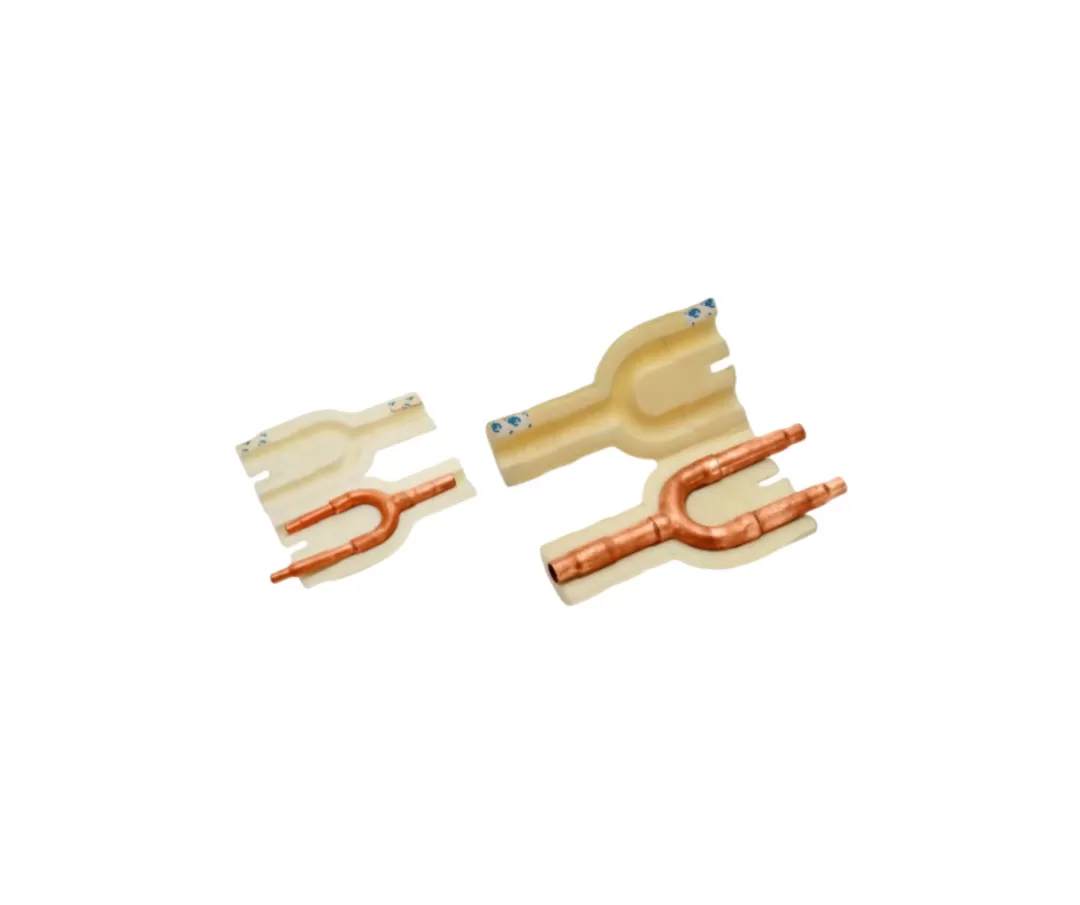
| Product Type | Pre-formed XLPE insulation for Copper VRF Y-Joints, branch joints and refrigerant piping components |
| Insulation Material | Cross-Linked Polyethylene (XLPE) Foam |
| Cell Structure | Fine, closed-cell structure |
| Grade | FR Grade – Flame-Retardant |
| Construction | Precision-moulded / pre-formed insulation designed to match component geometry |
| Thermal Performance | Low thermal conductivity to minimize heat gain and energy loss |
| Condensation Control | Designed to reduce surface condensation around copper joints and fittings |
| Water Absorption | Low water absorption due to closed-cell construction |
| Water Vapour Resistance | Low vapour permeability, helping restrict moisture penetration |
| Fire Performance | Flame-retardant XLPE options available; specific fire classification as per selected material grade/test certificate |
| Temperature Resistance | Suitable for operating temperatures normally encountered in HVAC&R refrigerant piping* |
| Refrigerant Application | Suitable for VRF/VRV piping systems using refrigerants such as R410A and R32* |
| Mechanical Properties | Lightweight, flexible and resistant to normal handling during installation |
| Component Compatibility | Y-Joints, Branch Joints, Headers, Copper Tees, Distributors and customized copper components |
| Sizes | Customized according to Y-joint/component dimensions |
| Application | VRF/VRV air-conditioning, heat-pump and commercial HVAC&R refrigerant piping |
| Installation | Pre-shaped construction supports quick positioning, fitting and sealing at site |
| Customization | Size, thickness, profile and insulation configuration can be developed to OEM/project requirements |

"What we've come to expect from 227 Enterprise's XLPE insulation is consistency — batch after batch, the material quality holds up, and that uniform construction has made it easier to keep our VRF installations at the standard we hold them to."
"Manufacturing consistency is where 227 Enterprise's XLPE insulation stands out for us. The finish is uniform, the construction is dependable, and honestly, that's most of what we're looking for when we're specifying insulation for professional HVAC work."
"From the first enquiry through to delivery, working with 227 Enterprise has been a good experience. The VRF XLPE insulation quality hasn't wavered order to order, and whenever we've needed support, their team has been quick to respond."
XLPE stands for cross-linked polyethylene — a closed-cell foam where the polymer chains are chemically bonded together during manufacturing, which is what gives it more dimensional stability and heat resistance than standard polyethylene foam. On VRF and VRV systems, that stability is exactly what branch joint insulation needs: it holds its shape and thermal performance through the temperature swings and physical handling a refrigerant line actually goes through, rather than degrading after a season or two.
The short list is UV resistance, moisture protection, vapor-penetration resistance, and dimensional stability — all of which matter more at a Y Branch Joint than on a straight run of pipe, because that's where the geometry gets complicated and insulation is most likely to be compromised. Add a flexible construction that still holds a precise fit, and you get a joint that installs cleanly, resists condensation, and keeps performing without the follow-up maintenance a lesser material would need.
The closed-cell structure is the mechanism — it traps air in a way that resists heat transfer far better than an open or poorly sealed material would, so less thermal energy escapes, or enters, along the refrigerant line. Less heat lost or gained between the outdoor unit and each indoor zone means the system doesn't have to work as hard to hold its set temperature, which is where the energy savings actually come from.
Yes, on all three counts, and that combination is really the point of specifying XLPE over a less stable foam. UV resistance matters for exposed piping runs — rooftop installations, external risers — where a lesser material would degrade in the sun over a few seasons. The closed-cell structure handles the other two: it resists moisture absorption and restricts vapor penetration, which is what stops condensation from forming on the copper joint underneath.
Yes — our DA Series XLPE insulation is engineered to specific VRF copper joint models rather than supplied as a generic wrap, so thickness, shape, and fitment are matched to the exact joint it's protecting. Send over the model number, drawings, or a Single Line Diagram and we'll build to that.
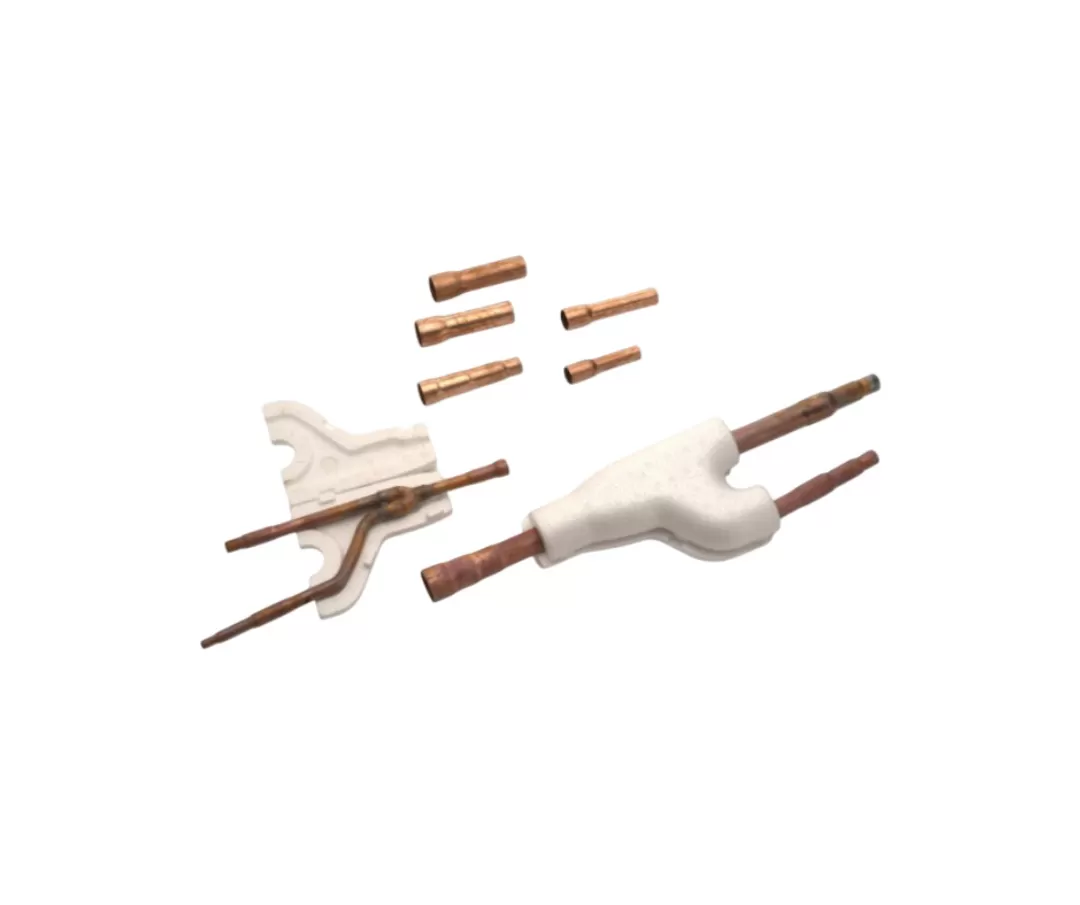
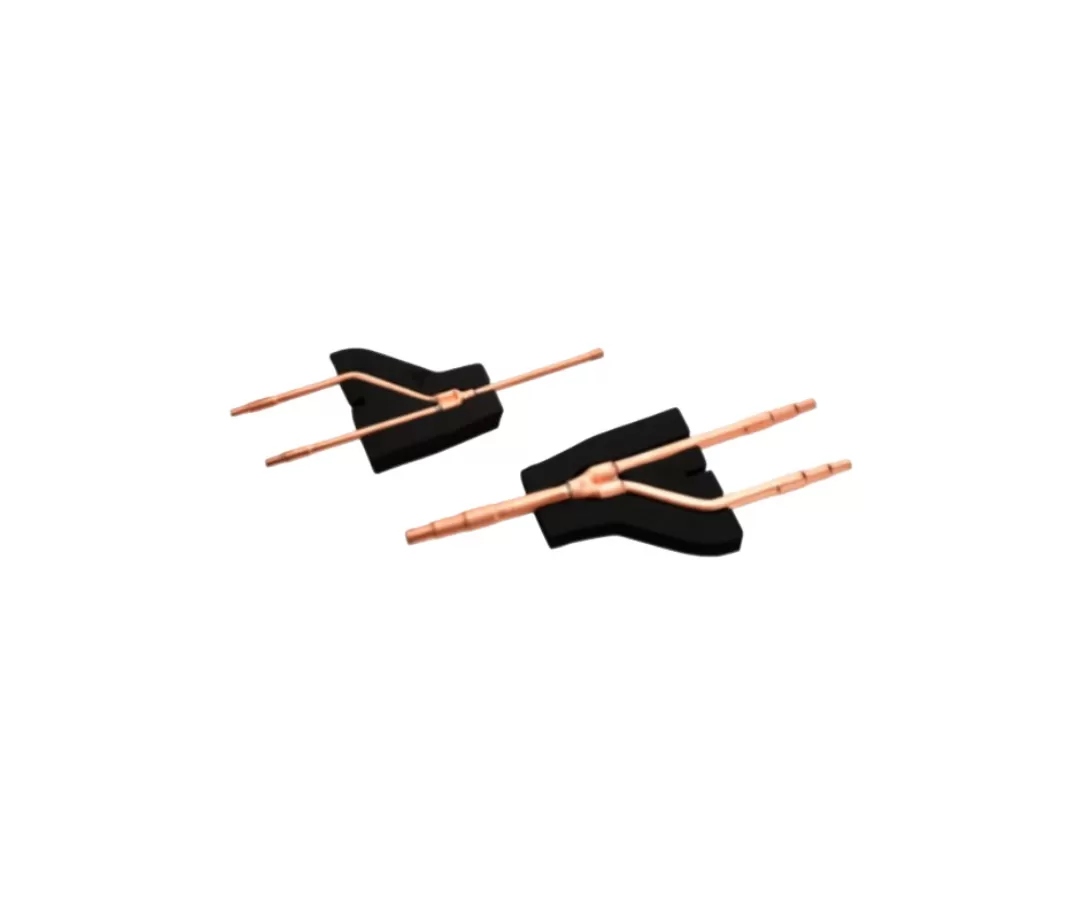
Flexible, fire-resistant nitrile rubber insulation for demanding applications.
Cross-linked polyethylene foam for superior moisture and thermal resistance.